
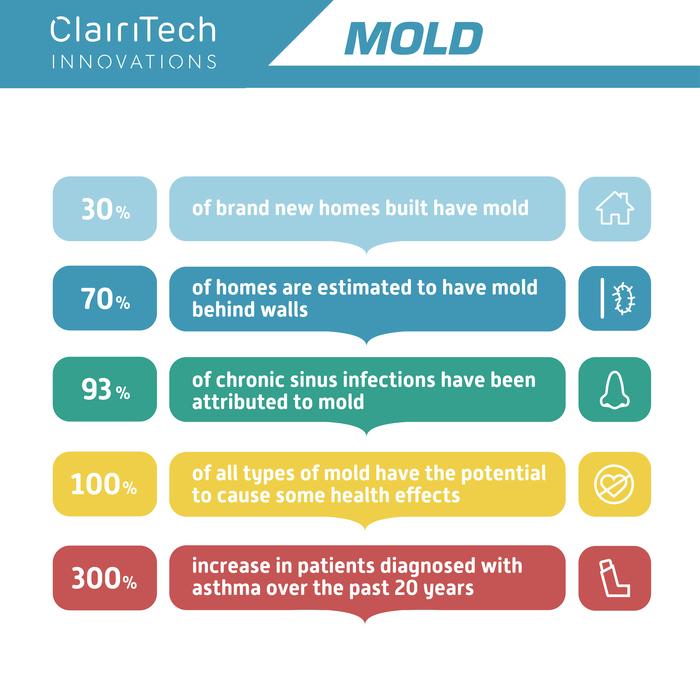
 Mold growth can cause allergies and respiratory problems such as asthma and lung diseases.
Your customers could be suffering from allergies without ever knowing that they do. It’s possible that they are allergic to the substances in the air of their homes. These substances include dust mites, animal dander (skin flakes), and mold.
The allergy symptoms include:
- sneezing and a runny nose
- itchy and watery eyes
- wheezing and coughing
- skin rashes
On average, North Americans spend close to 90% of their time indoors. That’s why it’s important that they are aware of the air quality in their homes. It’s crucial that you know the symptoms that clients are describing in order to present them with a solution.
Some easy mold-prevention methods to suggest to your customers are to:
- Open bathroom windows after showering.
- Turn on fans when cooking, dishwashing, or laundering
- Clean up any floods or spills immediately
- Remove spots or stains immediately on floors and carpets.
- Reduce the amount of water used when cleaning carpets as much as possible.
Mold growth can be hidden. Mold can grow behind walls or above ceiling tiles, so it is important to check for the presence of mold anywhere that is damp and especially where water damage has occurred.
Did you know that mold can grow in a variety of colours such as green, black, white, orange, and blue? Some kinds are more destructive than others, but it is hard to identify the type of mold as each strain can grow in a multitude of colours. One of the most common types of mold that grows in homes is green.
Green mold can be found growing on walls, cabinets, and carpets. Any type of damp fabric is a perfect environment for mold to form. The effects range from respiratory infections and inflammation of the lungs to serious illnesses such as bronchitis and pneumonias.
If your customers are asking you how to inspect their homes for signs of mold, here is what you can tell them: Start with a visual inspection of the home. Look for signs of mould or excessive moisture, such as stains or discolouration on floors, walls, window panes, ceiling tiles, fabrics, and carpets. Look for obvious signs of leaks, condensation, flooding, or a musty odour.
It can be difficult to get rid of mold once it starts to grow because it multiplies. It is important to prevent the growth of mold because it can be harmful to your health and expensive to fix. It’s better to avoid exposure to mold from the beginning rather than getting treatment after the fact.
The most important thing you can tell your customers is that one of the leading causes of developing mold is poor ventilation and the best way to breathe fresh air at home is to install a proper ventilation system.
